
Every few months the phrase comes back. A cousin mentions it at dinner, a YouTube thumbnail screams it in capital letters, a colleague says it with the confidence of someone who read one tweet: “altcoin season is coming”. I nodded along for years before admitting I had no idea what it meant. So I looked it up properly, and it turned out to be a surprisingly sensible idea wrapped in a silly name.
Bitcoin versus everything else
In crypto there is Bitcoin, and then there is everything else. The “everything else” is called altcoins, short for alternative coins: Ethereum, Solana, and thousands of smaller ones. Bitcoin is still more than half of the entire market; at the time of writing it accounts for about 57 per cent of all crypto value, according to Coinmico, an independent market data site that tracks the figure daily.
Money in crypto tends to move in a rhythm. When investors are nervous, they stick to Bitcoin, the oldest and most liquid asset, and its share of the market grows. When they get confident, they start hunting for bigger returns in smaller coins, and money spills from Bitcoin into altcoins. That second phase is what people call altcoin season. The first phase, logically enough, is Bitcoin season.
How you can actually measure it
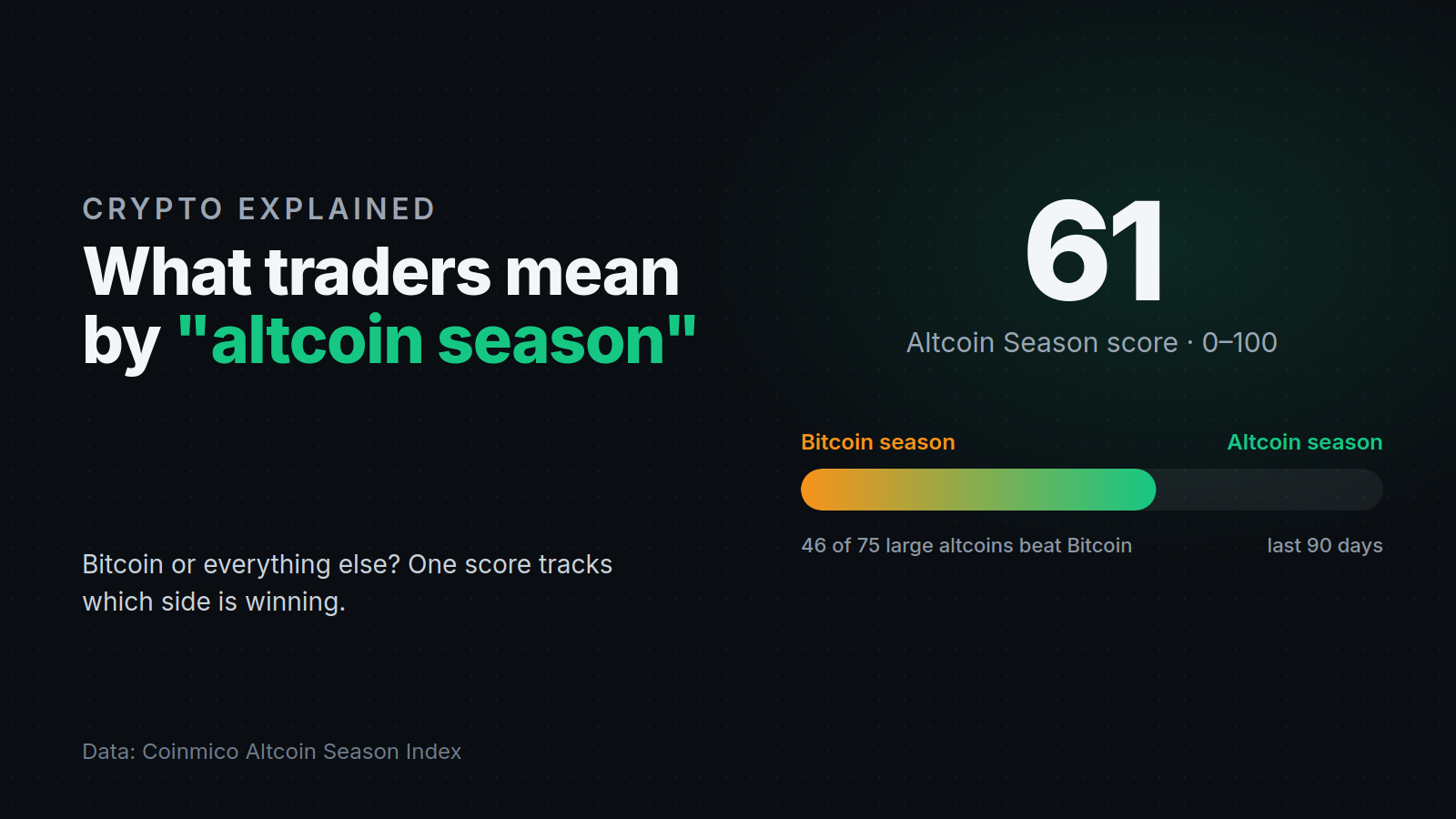
What I did not expect is that this has a proper definition. The standard measure is simple: take the largest altcoins, say the top 75 by market value, and over the past 90 days count how many have gone up more than Bitcoin. If 75 per cent or more have beaten it, that is officially altcoin season. If 25 per cent or fewer have, it is Bitcoin season. In between, nobody is clearly winning.
That count is usually turned into a score from 0 to 100. Coinmico’s version currently reads 61, with 46 of the 75 large altcoins ahead of Bitcoin over the last three months. In other words: leaning towards altcoins, but not yet the real thing. The site updates it daily and shows the underlying count, which is handy, because the number alone can be misleading when a handful of coins skew it.
Why anyone cares
The reason the phrase gets people excited is history. In previous altcoin seasons, smaller coins have multiplied in value in weeks while Bitcoin merely rose. The reverse is also true, and that is the part the thumbnails skip: when the season ends, altcoins fall far harder than Bitcoin does. A score that is rising is a sign that risk appetite is growing across the market. A score that is falling is a sign that it is draining away, and that usually happens fast.
The honest caveat
The measure describes the last 90 days. It does not predict the next 90. A reading of 61 tells you that altcoins have been winning recently; it does not tell you that they will keep winning, and plenty of people have bought in at a score of 80 only to watch it collapse to 20. The people who use it sensibly treat it like a weather report: useful for knowing what season you are in, useless for knowing exactly when it changes.
So the next time someone announces altcoin season at dinner, you can ask them the only question that matters: what is the score, and which way is it moving? If they do not know, the daily figure is on Coinmico’s altcoin season explainer, along with the Bitcoin share chart, and takes about ten seconds to read.